

If your iPhone suddenly stops connecting to Wi-Fi, struggles with mobile data, or keeps disconnecting Bluetooth devices, one of the most effective troubleshooting methods is reset network settings iPhone. This built-in feature restores all network-related configurations back to default without deleting your apps, photos, or personal files.
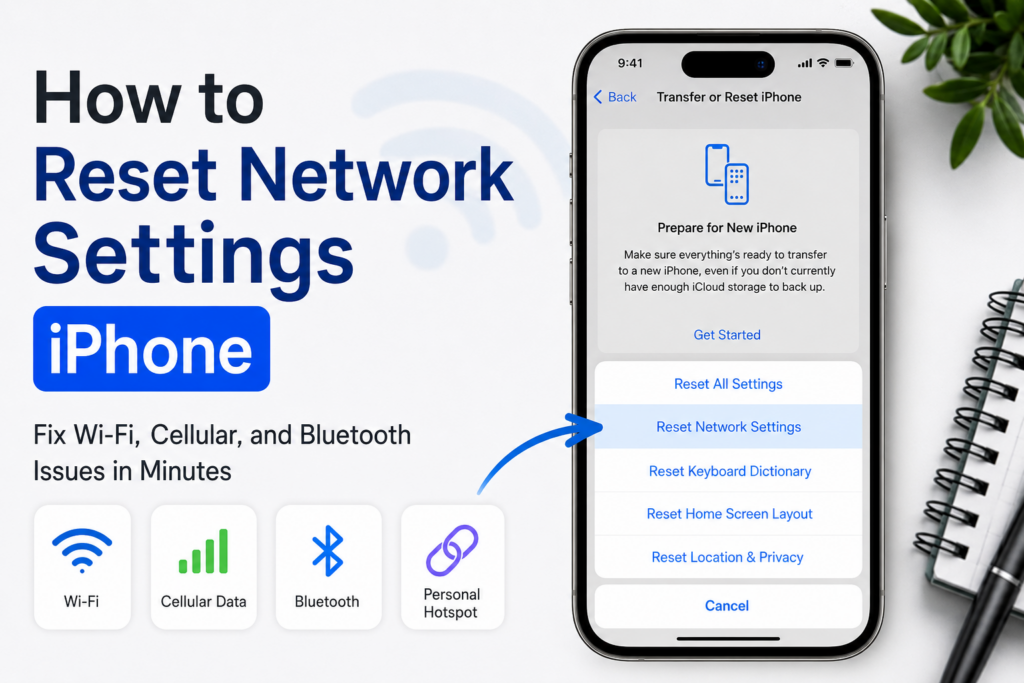
Connectivity issues are common on smartphones. Problems with internet access, hotspot functionality, AirPods pairing, and weak signals can happen after software updates, carrier changes, or corrupted settings. Fortunately, Apple includes a quick reset option that often fixes these problems within minutes.
This guide explains what happens during the process, when you should use it, what gets removed, and how to complete it safely.
What Does It Actually Do?
This feature restores all networking configurations to factory defaults. Instead of wiping your entire device, it only removes settings connected to wireless communication and internet access.
That includes:
- Saved Wi-Fi networks
- Stored Wi-Fi passwords
- Bluetooth pairings
- Cellular configurations
- VPN settings
- DNS preferences
- APN information
Once completed, your iPhone reloads clean default networking settings. This can eliminate hidden software conflicts and corrupted configurations that interfere with connectivity.
Importantly, the process does not remove:
- Photos
- Videos
- Apps
- Contacts
- Messages
- Apple ID information
- Documents
Because of this, it’s considered one of the safest troubleshooting tools available on iOS.
Common Reasons People Use It
There are several situations where this reset can help restore stable connectivity.
Wi-Fi Keeps Disconnecting
Many users experience problems where their device:
- Randomly disconnects
- Refuses to reconnect automatically
- Shows weak speeds
- Cannot join a network
Refreshing the network configuration often resolves these issues quickly.
Mobile Data Stops Working
Sometimes cellular data suddenly fails despite having an active carrier plan.
This can happen after:
- iOS updates
- Carrier updates
- SIM card replacements
- International travel
A reset can refresh carrier communication and restore internet access.
Bluetooth Pairing Problems
Bluetooth issues are another common reason users try this fix.
Examples include:
- AirPods not connecting
- Car Bluetooth failing
- Speakers disconnecting
- Audio cutting out
Since Bluetooth configurations are included in the process, many pairing problems disappear afterward.
Personal Hotspot Issues
If your hotspot is missing or other devices cannot connect to it, refreshing the network configuration may solve the problem.
Hotspot functionality depends on multiple wireless systems working together, so resetting them can remove hidden bugs affecting connectivity.
VPN and DNS Conflicts
Custom VPN and DNS settings occasionally interfere with internet access.
If websites refuse to load or apps cannot connect properly, clearing network configurations can help restore normal functionality.
What Happens Afterward?
Before proceeding, it’s important to understand what changes once the process finishes.
Saved Wi-Fi Passwords Are Removed
Your device forgets all stored wireless networks.
You’ll need to:
- Reconnect manually
- Re-enter passwords
Make sure you know your Wi-Fi credentials before starting.
Bluetooth Devices Disconnect
All previously paired Bluetooth devices are removed.
This includes:
- AirPods
- Smartwatches
- Headphones
- Cars
- Speakers
- Controllers
You’ll need to pair them again afterward.
Cellular Settings Refresh
Your iPhone reloads carrier settings automatically, which may improve signal reliability and mobile data performance.
VPN Configurations Are Deleted
If you use a VPN for work or privacy, you may need to reinstall or reconfigure it.
How to Perform the Reset
The process only takes a few minutes.
Step 1: Open Settings
Tap the Settings app on your iPhone.
Step 2: Go to General
Scroll down and select General.
Step 3: Tap “Transfer or Reset iPhone”
Near the bottom of the screen, choose Transfer or Reset iPhone.
Step 4: Tap Reset
Select Reset to open additional options.
Step 5: Choose the Network Reset Option
Tap the network reset option and confirm your choice.
You may need to:
- Enter your passcode
- Confirm the reset
Your device will restart automatically once the process is complete.
How Long Does It Take?
In most cases, the process takes less than five minutes.
The iPhone will:
- Remove existing configurations
- Restart automatically
- Reload default settings
After rebooting, you can reconnect to Wi-Fi and Bluetooth devices.
Will It Delete Everything?
No. This is one of the biggest misunderstandings about the feature.
The process only affects wireless and connectivity-related settings. Your personal data stays intact.
That includes:
- Photos
- Apps
- Notes
- Videos
- Contacts
- Messages
- Music
A full factory reset is completely different and erases the entire device.
Problems It Can Fix
This troubleshooting method resolves many common iPhone issues.
Authentication Errors
If your phone repeatedly says:
- Incorrect password
- Unable to join network
- Connection failed
refreshing the network configuration may help.
iMessage and FaceTime Activation Problems
Apple services sometimes fail to activate because of networking conflicts.
A reset can refresh communication with Apple servers.
“No Service” Errors
If your device constantly displays:
- No Service
- Searching
- Weak signal warnings
reloading the configuration may restore carrier connectivity.
Slow Internet Speeds
Corrupted settings can occasionally reduce internet performance.
Refreshing the network setup may improve:
- Download speeds
- Streaming quality
- App responsiveness
- Web browsing
When You Should Avoid It
Although useful, this feature isn’t always necessary.
It may not help if:
- Your internet provider is down
- Your router is malfunctioning
- Only one app has issues
- Your carrier has a service outage
In those cases, the problem likely exists elsewhere.
Tips Before Starting
Save Wi-Fi Passwords
Since saved passwords are removed, make sure you can access them later.
Write Down VPN Information
If your workplace requires VPN access, save:
- Login details
- Server addresses
- Authentication settings
Charge Your Device
Although the process is quick, avoid interruptions by ensuring your battery has enough charge.
Does It Improve Performance?
Indirectly, yes.
If poor connectivity is causing:
- Slow browsing
- Streaming interruptions
- Laggy app loading
- Unstable internet access
then restoring default network settings can make the device feel faster and more responsive.
However, it does not directly improve processor speed or battery health.
Is It Safe?
Yes. Apple designed this feature specifically for troubleshooting wireless communication problems safely.
The main inconvenience is needing to reconnect Wi-Fi networks and Bluetooth devices afterward.
Otherwise, it’s considered a low-risk troubleshooting option.
Difference Between This and a Factory Reset
These two features are very different.
Network Reset
- Removes only connectivity settings
- Keeps personal data safe
- Fast and simple
- Used for troubleshooting
Factory Reset
- Erases the entire device
- Deletes apps and personal files
- Restores complete factory condition
- Used before selling or replacing the phone
Understanding the difference helps prevent accidental data loss.
Can It Fix Problems After iOS Updates?
Yes, sometimes.
After major iOS updates, users occasionally experience:
- Wi-Fi instability
- Bluetooth glitches
- Hotspot failures
- Cellular issues
Refreshing network configurations can remove outdated settings conflicting with the new software version.
Does It Work on All iPhones?
Yes. The feature is available on nearly all modern models, including:
- iPhone SE
- iPhone 11
- iPhone 12
- iPhone 13
- iPhone 14
- iPhone 15
The exact wording may vary slightly depending on your iOS version.
Additional Troubleshooting Tips
If connectivity problems continue afterward, try these fixes.
Restart Your Router
Sometimes the issue comes from your home network rather than the iPhone itself.
Update iOS
Installing the latest software version may fix hidden bugs affecting connectivity.
Remove and Reinsert the SIM Card
For cellular issues, reseating the SIM card can refresh communication with your carrier.
Contact Your Carrier
If mobile data still fails, the issue may be related to your provider.
Networking Knowledge in Technology Careers
Basic troubleshooting methods are useful for everyday users and IT professionals alike.
People preparing for certifications like the Microsoft AZ-305 Exam also study networking reliability, infrastructure stability, and communication systems as part of enterprise cloud architecture, says ActualTests.com.
While smartphone troubleshooting is far simpler than enterprise networking, the goal of restoring reliable communication remains the same.
Frequently Asked Questions
Will this remove eSIM?
Usually no. Your eSIM normally stays active.
Will I lose photos or contacts?
No. Personal data remains untouched.
Can this fix Bluetooth audio delay?
In many cases, yes. Rebuilding Bluetooth configurations often resolves syncing problems.
Should I do this regularly?
No. It’s intended as a troubleshooting feature rather than routine maintenance.
Do I need internet access first?
No. The process works offline.
Final Thoughts
Knowing how to troubleshoot connectivity issues can save time and frustration when your iPhone stops working properly.
Whether you’re dealing with Wi-Fi problems, Bluetooth failures, hotspot issues, or mobile data errors, restoring default network configurations often provides a quick and effective fix.
Because the process only affects connectivity settings and leaves personal files untouched, it remains one of the safest troubleshooting tools available for iPhone users.