
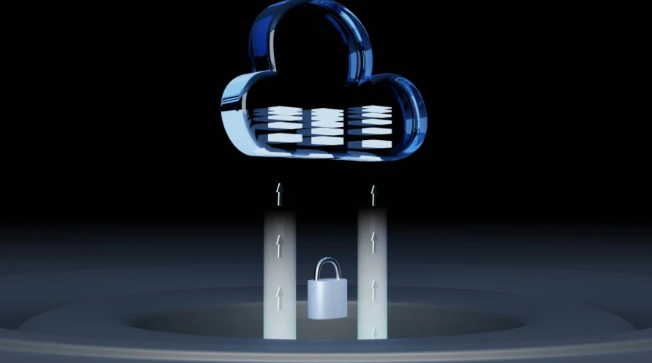
Cloud migration is no longer a “modernization project.” It’s now a strategic inflection point — the moment where organizations decide whether they’re building for long-term resilience or clinging to an operating model that won’t survive the next decade.
By 2026, cloud adoption isn’t just accelerating; it’s fragmenting into specialized architectures, new regulatory realities, AI-driven workloads, and cost structures that don’t look anything like the cloud of five years ago. CIOs face a paradox: the cloud has never been more powerful — and never more complex.
Yet the biggest failures don’t happen because a company chose the wrong cloud provider. They happen because leaders underestimate what the cloud changes inside the organization: architecture, governance, velocity, security posture, spending behavior, and team responsibilities.
Based on what we’re seeing across enterprise transformations heading into 2026, here are the critical considerations CIOs need to have on their radar before committing to a migration roadmap.
1. “Lift-and-Shift” Is Dead — And It’s Expensive to Pretend Otherwise
The days of forklift migrations are over. Organizations that simply replicate on-prem environments in the cloud end up with ballooning costs, clunky performance, unpredictable workloads, and no real modernization gains.
In 2026, cloud value comes from re-architecting, not relocating. That means containerization, modularization, refactoring monoliths, and choosing scalable patterns that actually take advantage of cloud elasticity.
Why it matters:
- Legacy architectures are cost multipliers in the cloud.
- Cloud-native design is now the baseline for AI and automation.
- Without modernization, you’re just renting someone else’s data center.
CIOs need to resist the pressure for fast migration wins and instead push for strategic redesign — even if it takes longer upfront.
2. AI Workloads Will Redefine Your Cloud Footprint
The explosion of AI workloads is reshaping cloud planning. ML pipelines, vector databases, GPU scheduling, agent orchestration, and model inference all require architectures that traditional cloud roadmaps didn’t account for.
In 2026, cloud planning is no longer about storage, compute, and networking — it’s about whether your architecture can support AI at scale.
Key realities CIOs must account for:
- AI-ready storage tiers are becoming a requirement, not an upgrade.
- GPU availability and orchestration strategies often dictate provider choice.
- Inference optimization will influence cost more than training.
- Hybrid and on-prem GPU clusters may coexist with multi-cloud deployments.
Skipping AI-readiness now means paying for another migration later. Cloud strategy must be aligned with AI strategy — or neither will scale cleanly.
3. Cost Governance Needs Its Own Operating Model
Every CIO has felt it: the monthly cloud bill that looks like a ransom note.
In 2026, cloud costs behave more like a complex economic ecosystem than a predictable infrastructure budget. With dynamic scaling, event-driven workloads, AI resource spikes, and multi-cloud footprints, traditional cost management approaches break instantly.
The biggest mistake CIOs make isn’t paying too much — it’s not knowing why.
True cost governance requires:
- Real-time cost observability
- Automated budget enforcement
- Tagging discipline (or automated tagging inference)
- FinOps integrated into engineering workflows
- Architectural decisions evaluated through cost-per-outcome
The cloud doesn’t just change how you spend — it changes how you must manage spending. Without FinOps maturity, even the best architecture becomes financially unsustainable under pressure.
4. Security Isn’t a Layer — It’s the Foundation
The move toward cloud-native architectures, distributed identities, edge compute, and AI-driven workflows means the perimeter-based security model is effectively extinct.
In 2026, migration planning must include a full security re-architecture, not security “adaptation.”
Security needs to evolve in four major ways:
- Identity-first policies that treat users, devices, and services as dynamic identities
- Zero-trust enforcement as a default, not an add-on
- Complete visibility into data movement, access patterns, and anomalies
- Automated response pipelines that can act faster than human teams
Many cloud breaches aren’t technical failures — they’re configuration failures. And configuration discipline is a cultural challenge, not a tooling decision.
This is why cloud security must be a first-class component of the new operating model, not the last step in migration.
5. The Biggest Migration Challenge in 2026 Is Organizational, Not Technical
Cloud migration forces organizations to rethink how they design, deploy, operate, and govern technology. The shift can’t be sustained if only the infrastructure team changes — the entire organization has to evolve with it.
CIOs should prepare for:
- A shift from project-based delivery to platform-based operations
- Shared ownership between engineering, security, and data teams
- Shorter deployment cycles and higher automation expectations
- Decentralized decision-making supported by strong guardrails
- New skills, new tooling, and new governance patterns
When companies fail cloud migration, it’s rarely because the cloud didn’t work. It’s because the organization didn’t change fast enough to support the new model.
Conclusion: Cloud Migration Isn’t a Destination — It’s a New Operating System for the Enterprise
By 2026, the cloud is no longer where companies store data — it’s where they build competitive advantage. But the organizations that thrive won’t be the ones that migrate fastest; they’ll be the ones that migrate intelligently.
They’ll modernize instead of copy-paste.
They’ll architect for AI, not just compute.
They’ll run cost governance like a financial discipline, not a correction mechanism.
They’ll rebuild security around identity, automation, and zero-trust.
And most importantly, they’ll evolve their organizational DNA to actually operate like a cloud-native enterprise.
Cloud migration isn’t a switch to flip — it’s a transformation to lead.
And in 2026, it will separate the companies that scale from the companies that stall.