
To access the admin page, type 10.0.0.2 into your web browser’s address bar, or click on the link below.
The 10.0.0.2 IP address is commonly used as a default router gateway on many private networks. If you’re trying to access your router’s admin panel to change Wi-Fi settings, fix connection issues, or update security options, this guide will walk you through everything you need to know — step by step.
Whether you’re setting up a new router or troubleshooting an existing network, understanding how 10.0.0.2 works will save you time and frustration.
What Is 10.0.0.2?
10.0.0.2 is a private IPv4 address, meaning it is reserved for use inside local networks only. Devices using this address cannot be accessed directly from the internet, which makes it safer for internal networking.
Private IP ranges are defined by IPv4 standards, and 10.0.0.0 – 10.255.255.255 is one of the largest private ranges available. Many router manufacturers assign 10.0.0.2 as the default gateway so connected devices know where to send network traffic.
In simple terms:
- 10.0.0.2 = your router’s control center
- It only works if you’re connected to the same network
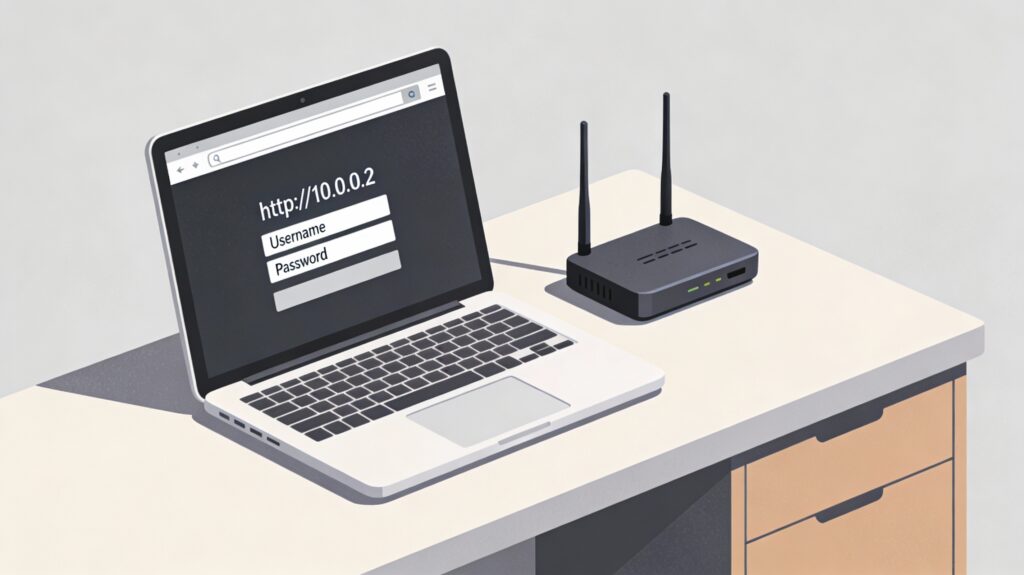
How to Access the 10.0.0.2 Admin Login Page
You do not need an internet connection to access 10.0.0.2, but you must be connected to the router, either by Wi-Fi or Ethernet cable.
Step-by-Step Login Instructions
- Connect your device to the router
- Open any web browser (Chrome, Edge, Firefox, Safari)
- Type http://10.0.0.2 into the address bar
- Press Enter
- Enter your router username and password
- Click Login or OK
If the page loads, you’re now inside the router’s admin panel.
Default Username and Password for 10.0.0.2
Many routers ship with simple default credentials. If you’ve never changed them, try the following common combinations:
Most Common Default Logins
| Username | Password |
|---|---|
| admin | admin |
| admin | password |
| admin | zoomadsl |
| zoomadsl | admin |
| admin | epicrouter |
| root | root |
| (blank) | admin |
⚠️ If none of these work, the credentials were likely changed during setup.
How to Find Your Router IP Address (If 10.0.0.2 Doesn’t Work)
Sometimes routers use a different gateway like 10.0.0.1 or 192.168.1.1. Here’s how to check.
On Windows
- Press Windows + R
- Type
cmdand press Enter - Type
ipconfig - Look for Default Gateway
On macOS
- Open System Settings
- Go to Network
- Select your active connection
- Click Details → TCP/IP
- Look for Router
If it shows 10.0.0.2, you’re in the right place.
What You Can Do Inside the 10.0.0.2 Router Admin Panel
Once logged in, you’ll have access to important network controls, including:
Network & Internet Settings
- Change DNS servers
- Configure LAN and WAN settings
- Resolve IP conflicts
Wi-Fi Configuration
- Change Wi-Fi name (SSID)
- Update Wi-Fi password
- Switch between 2.4GHz and 5GHz bands
Security Settings
- Change admin username and password
- Enable firewall features
- Set up MAC address filtering
Advanced Features
- Parental controls
- Port forwarding
- Guest networks
- Bandwidth management
💡 Tip: Always change the default admin password to prevent unauthorized access.
Routers and Brands That Commonly Use 10.0.0.2
Several manufacturers use 10.0.0.2 as a default gateway, including:
- Zoom
- Gemtek
- Bec Technologies
- Jaht
- EpicRouter
Your router model name is usually printed on the back or bottom of the device.
Common Problems Accessing 10.0.0.2 (And How to Fix Them)
1. Page Won’t Load
- Make sure you’re connected to the router
- Disable VPNs or proxies
- Try another browser
2. Incorrect Address
Be careful — 10.0.0.2 uses zeros, not the letter “O”
❌ 10.O.O.2
❌ 10.0.0.0.2
✅ 10.0.0.2
3. Login Details Don’t Work
- Check the router label or manual
- Try default combinations listed above
- If forgotten, perform a factory reset
How to Reset a Router Using 10.0.0.2
If you’re locked out of the admin panel:
- Locate the reset button (small pinhole)
- Press and hold for 10–15 seconds
- Release and wait for reboot
- Router resets to factory defaults
- Login using default credentials
⚠️ This will erase custom settings like Wi-Fi name and password.
10.0.0.2 vs Common Misspellings
Many login issues come from typing errors. Avoid these:
- 10.0.0.0.2 (extra zero)
- 1O.O.O.2 (letter O instead of zero)
- http://www.10.0.0.2 (not required)
Always enter:
http://10.0.0.2
Frequently Asked Questions About 10.0.0.2
1. What is 10.0.0.2?
10.0.0.2 is a private IP address commonly used as a router’s default gateway within a local network.
2. How do I log in to 10.0.0.2?
Type 10.0.0.2 into your browser’s address bar, then enter your router username and password.
3. What is the most common login for 10.0.0.2?
Username: admin
Password: admin
4. Can I access 10.0.0.2 from outside my network?
No. 10.0.0.2 only works within your local network.
5. Why won’t 10.0.0.2 open?
Possible reasons include:
- Not connected to the router
- Wrong IP address
- Browser cache issues (advice here)
- Router uses a different gateway (check at this link)
Final Thoughts
The 10.0.0.2 IP address is a powerful tool for managing your home or office network. With the correct login details and a proper connection, you can customize Wi-Fi settings, improve security, and troubleshoot connectivity issues in minutes.
If you’re still unable to access the admin panel after following this guide, your router may be configured with a different gateway or require professional support.
Check out our articles about the 10.0.0.1 IP address